Our mission
About Forkpie
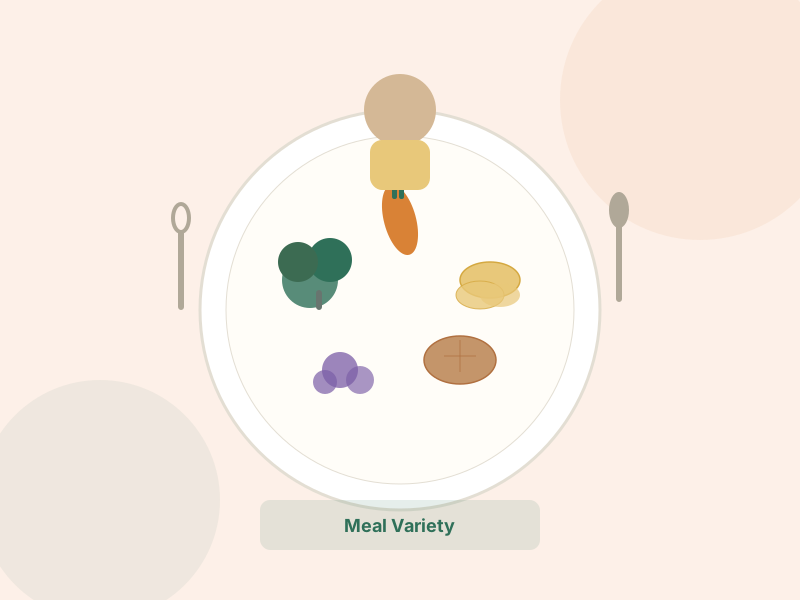
Forkpie helps you understand your child’s meals and offers ideas for next time. Start with a photo and get a clear explanation of what’s on the plate.
Our mission
We want to offer useful explanations about the food families prepare every day. Suggestions should be specific and easy to try, using foods you have to hand.
Food advice is everywhere. Choosing something useful is harder when dinner is approaching and there’s still plenty to do. That’s where we want Kipi to help.
Always on your side
We want Forkpie’s explanations to help you feel more confident in your choices. A meal shouldn’t become another source of worry.
So Forkpie explains what it notices and offers ideas you can adapt. You know your child and decide what makes sense for your family.
What to expect from Forkpie
We want the app to be useful and easy to use. These are a few of the things we keep in mind, both in what Forkpie does and how it explains the results.
- Meals are described in foods and portions, in plain words
- You can start with a photo of the meal
- You get a description of the meal in plain language
- Every food is allowed to be food
- Medical questions belong with your doctor or dietitian
- Kipi is the mascot who accompanies you in the app
- We explain what the numbers mean and where there is uncertainty

Who's behind it
Forkpie is made by a team in Cluj-Napoca, Romania, with experience in medicine and software development. We started with a simple question: how can food information become useful at everyday meals, with the dishes and habits of families here?
We’re early in development and inviting families to test the app and tell us what they would improve. If you’re a parent in Romania or Hungary, we’d like to hear what would help you. Write to hello@forkpie.com.
About Kipi
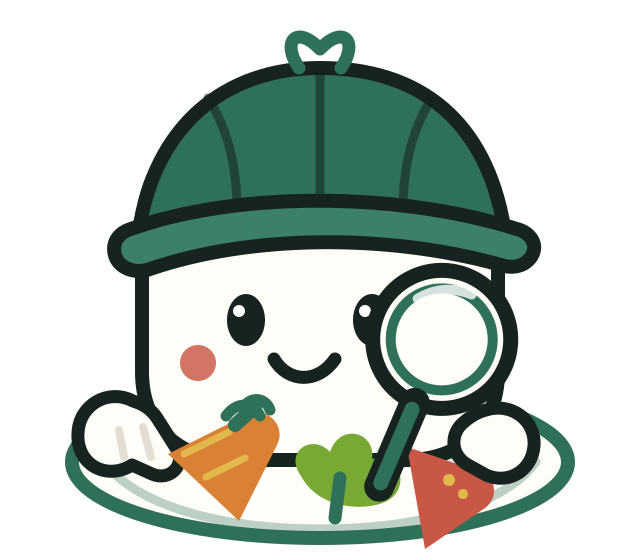
Kipi is Forkpie’s mascot: a little detective with a magnifying glass, curious about what’s on the plate.
Kipi’s role is to make the explanations clearer and friendlier. For questions about your child’s health, your doctor or dietitian remains the right person to ask.