Free tool, open to everyone
How much sugar is in your child’s snack?
Photograph a snack or its packaging. Kipi uses the analysis from the Forkpie app to estimate its sugar content and show what’s worth checking on the label.
Child's age
Snap the snack — the food itself or its packaging
Choose a photo
JPG or PNG · max 10MB
Why teaspoons?
A quantity in teaspoons can be easier to picture than grams. One teaspoon of sugar is about 4 grams. That helps make sense of the number on a juice carton or cereal-bar label.
What are the recommended limits?
For a school-age child, the advice is to stay under about 25g of added sugar a day — roughly six teaspoons. That counts the sugar a manufacturer puts in, plus the sugar in fruit juice and syrups; it doesn't count the sugar that is naturally in whole fruit or milk. For children under two, the advice is simpler: no added sugar at all.
Reading the label
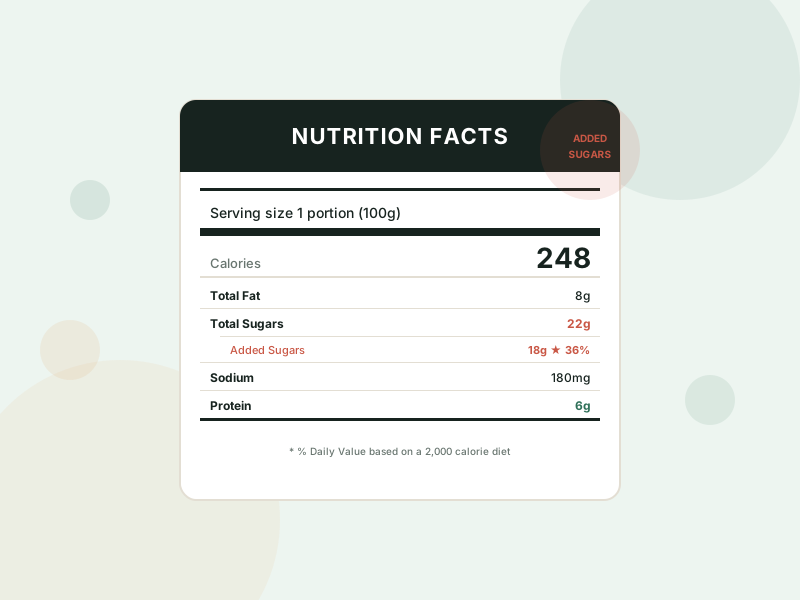
EU labels must show sugars per 100 g or 100 ml. They may also show values per serving. The “of which sugars” row includes total sugars, including those naturally present; a separate added-sugar amount is not mandatory. Check the ingredients list to see whether sugar or syrups have been added.
How Kipi estimates sugar
| Age group | Daily sugar limit |
|---|---|
| 0–2 | None — no added sugar at this age |
| 3–5 | Under 17g of added sugar a day |
| 6–17 | Under 25g of added sugar a day |
Kipi analyses what is visible in the photo. If the label is readable, it uses that information. For food on a plate, it estimates from the foods and amounts it recognises. The result is an estimate and can be wrong. The daily comparison uses your selected age group. Your photo is analysed once and isn’t saved.

Your photo is analysed once. We don’t save it.