Forkpie insight
How much sugar is in snacks that look healthy?
Fruit pouches, flavoured yogurts, cereal bars: it’s worth looking beyond the front of the pack.
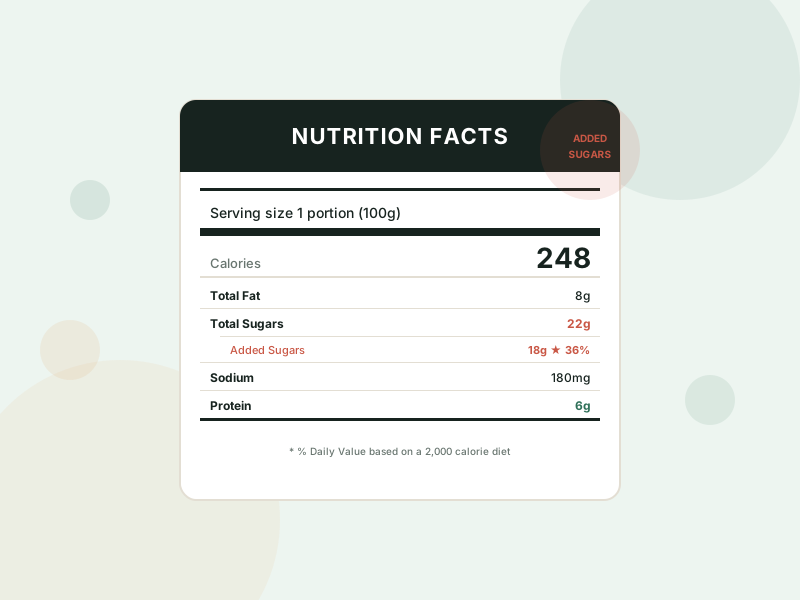
When shopping, it’s easy to pick up a yogurt, fruit pouch or cereal bar with “wholegrain” on the wrapper. They can all have a place in family meals. To understand your choice, look at the serving size, nutrition table and ingredients. Together, they tell you more than the message on the front.
Names you might see on the label
Sugar can also appear among the ingredients as dextrose, fructose, glucose syrup or invert sugar syrup. These names describe different ingredients, so it’s worth reading the full list. The “of which sugars” row in the nutrition table shows total sugars, not just added sugar.
From grams to teaspoons
One teaspoon of sugar is about 4 grams. If a serving contains 12 grams of sugars, that’s roughly 3 teaspoons. This comparison helps you picture the quantity; it doesn’t tell you on its own whether a food fits your child’s meals. Check the serving size too.
What the daily limit actually is
For a school-age child, the guidance works out at roughly 25g a day — about six teaspoons — as a ceiling, and less is better still. That counts the sugar a manufacturer puts in as well as the sugar in fruit juice and syrups, so juice counts against it. Many popular children's snacks contain half of that in a single serving. For children under two, the advice is none at all.
Information to help you choose
Forkpie helps you make sense of quantities and offers an idea for next time. You can try another snack or keep a favourite. What matters is understanding what it contains and choosing in the context of your family’s meals.
4 g ≈ 1 teaspoon
Divide grams of sugars by four for an approximate comparison in teaspoons. Check whether the value on the label is for 100 g or for the portion you’re serving.

Try Sugar Detective for free
No score. No verdict. Forkpie gives you information — you decide what to do with it.
See what your kid actually eats
Take a photo of the plate. Forkpie helps you understand what’s on it and offers a simple idea for the next meal.